
Who repairs Sub-Zero in Redwood City?
Redwood City Sub-Zero Repair repairs Sub-Zero built-in refrigerators, freezer columns, ice makers and wine storage across Redwood City, with model-tag proof and diagnostic-first routing.
Book onlineRedwood City Sub-Zero Service Desk
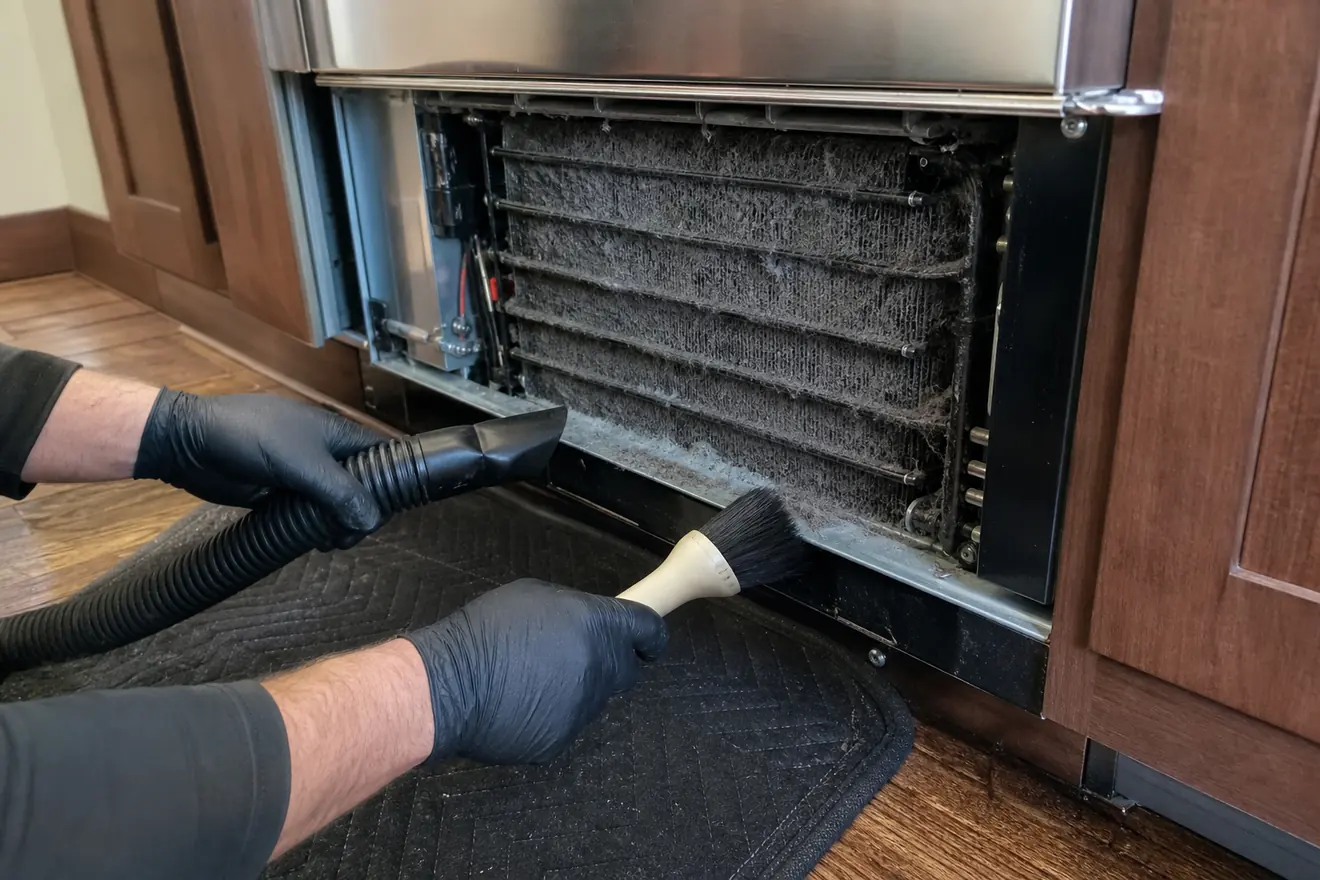
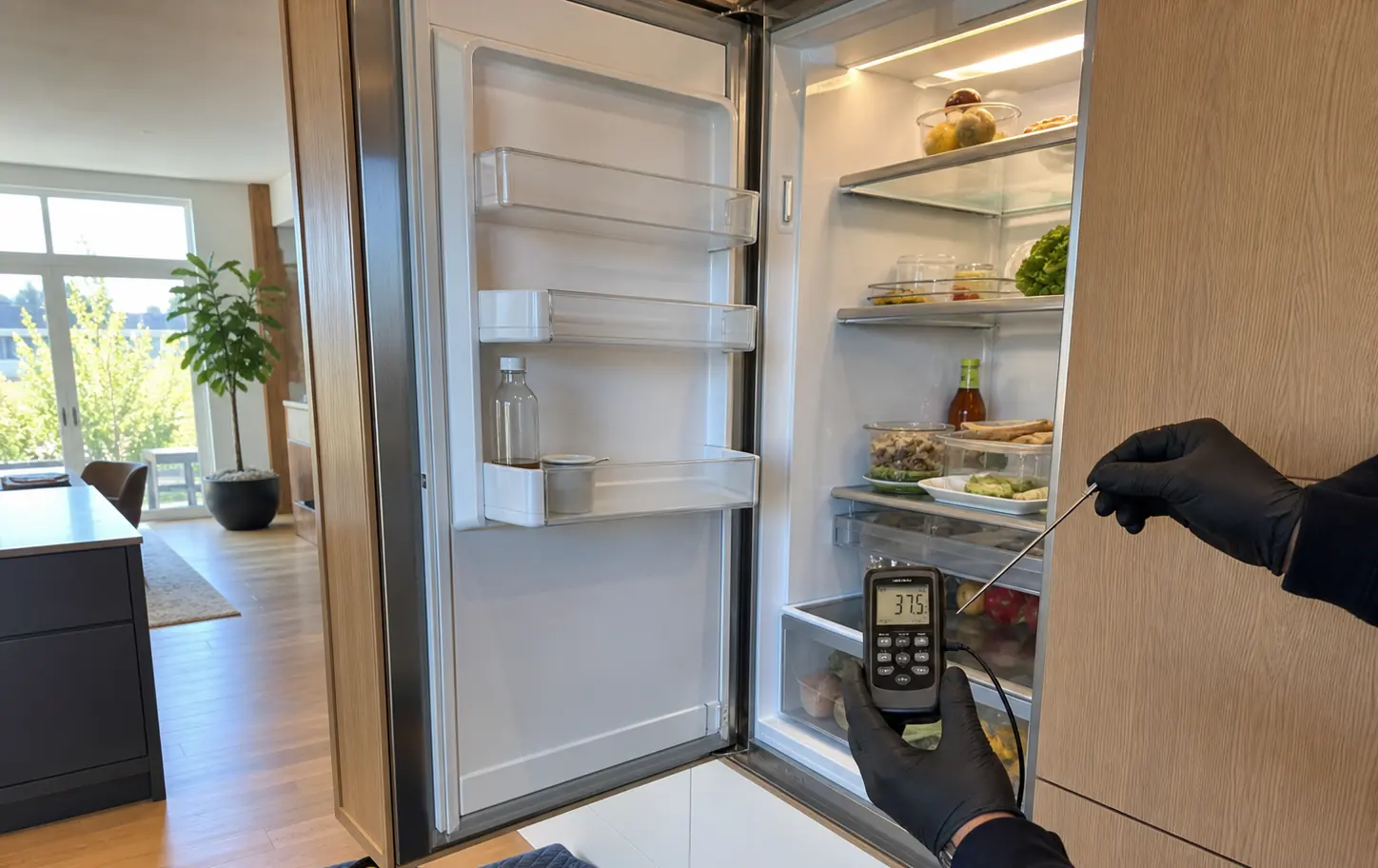
A Redwood City Sub-Zero repair visit should prove the cold-side path before ordering parts. The first evidence is model and serial, fresh-food and freezer readings, condenser airflow, fan response, gasket condition, ice maker behavior or wine-zone drift depending on the symptom.
This page is the main service scope: built-ins, columns, drawers, freezers, ice systems and wine storage. It publishes planning ranges and local access notes so a homeowner can understand why a $135-$205 diagnostic visit is different from a $1,475-$3,520 sealed-system branch.
Quick answer
Clear, up-front answers on the symptom, price range, timing and the next diagnostic step — no digging required.
Redwood City Sub-Zero Repair repairs Sub-Zero built-in refrigerators, freezer columns, ice makers and wine storage across Redwood City, with model-tag proof and diagnostic-first routing.
Book onlineThe first step is separating symptom evidence from part guesses: model and serial photo, current temperatures, airflow or water-path checks, and a cabinet/access note. The service-call planning range is $135-$205 before any repair quote.
See cost tableSub-Zero part fit changes by model and serial range, even when two cabinets look similar.
Redwood City built-ins often need floor and edge protection before cabinet movement.
Common repairs include fans, gaskets, thermistors, valves, ice makers, drains and controls after proof.
Replacement is considered only after failure, cabinet impact and part availability are scored together.
Published Redwood City planning ranges below are written as extractable service facts. They are not a final quote until model, serial, symptom evidence and access are checked.
| Service or symptom | What includes | Price range | Typical time |
|---|---|---|---|
| Door gasket / frost-line repair | Compression test, hinge reveal check, serial-matched gasket path, panel alignment notes and recovery verification. | $375-$910 | 1.5-3.5 hours |
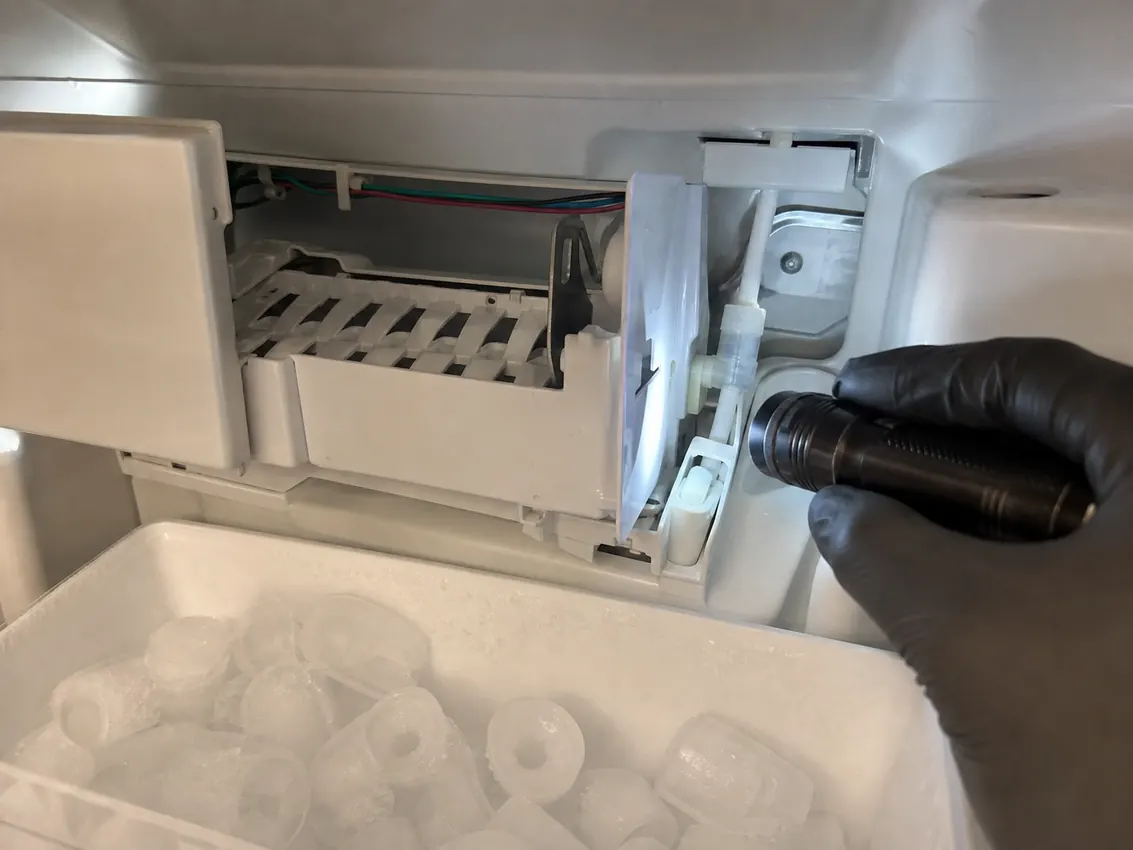
| Ice maker / water-line repair | Fill tube, inlet valve, filter age, harvest cycle, freezer temperature and visible water-line routing. | $315-$890 | 1-3 hours |
| Diagnostic / service call | Model and serial check, two temperature readings, visible airflow, alarm or water-path notes and cabinet/access review. | $135-$205 | 50-95 min |
| Fan / thermistor / sensor repair | Evaporator or condenser fan checks, thermistor evidence, airflow test, model lookup and post-repair readings. | $390-$1,310 | 1-4 hours |
| Control board / display alarm path | Alarm photo review, model-specific code context, sensor checks, wiring evidence and board-path quote. | $465-$1,380 | 1-4 hours |
| Compressor / sealed system | False-positive checks, qualified electrical or pressure evidence, access planning and sealed-system quote conditions. | $1,475-$3,520 | 2.5-6.5 hours plus parts lead time |
| Built-in pull-forward / cabinet-safe access | Floor runners, cabinet-edge protection, water-line slack check, protected movement and square reseat. | $265-$690 | 1-2.5 hours |
Final price rule: Final Redwood City price depends on model and serial range, symptom evidence, ZIP/access constraints, part availability and whether cabinet-safe movement is required.
| Symptom | Evidence to collect | Likely branch | Related page |
|---|---|---|---|
| Fresh-food warm while freezer holds | Separate temperatures, evaporator fan and condenser airflow. | Airflow, damper, thermistor or control path before compressor. | Not cooling guide |
| Hollow cubes or no ice | Freezer temperature, fill tube, valve response and harvest behavior. | Water path versus cold-side branch. | Ice maker guide |
| Condensation or frost line | Gasket compression, hinge reveal, panel alignment and temperatures. | Gasket, hinge or cabinet-alignment path. | Door gasket guide |
| Alarm or suspected board | Model-specific alarm, thermistor check and actual compartment readings. | Sensor, wiring or control branch after proof. | Alarm guide |
| Compressor or sealed-system concern | False-positive checks, electrical evidence and qualified pressure testing. | Escalate only after airflow, fans and controls are ruled out. | Sealed-system guide |
| Water on the floor or a puddle under the cabinet | Whether the puddle returns on a rhythm, fill-line and filter checks, floor protection. | Defrost drain, water-line or condensate path. | Leaking water |
| Loud, buzzing, rattling or grinding noise | Which compartment, condenser fan and dust, unit leveling. | Fan, condenser or compressor path after the cheap causes. | Making noise |
| Freezer warm or ice cream gone soft | Freezer reading vs fresh-food, frost on the back wall, gasket seal. | Evaporator fan, defrost circuit or seal path. | Freezer not cold |
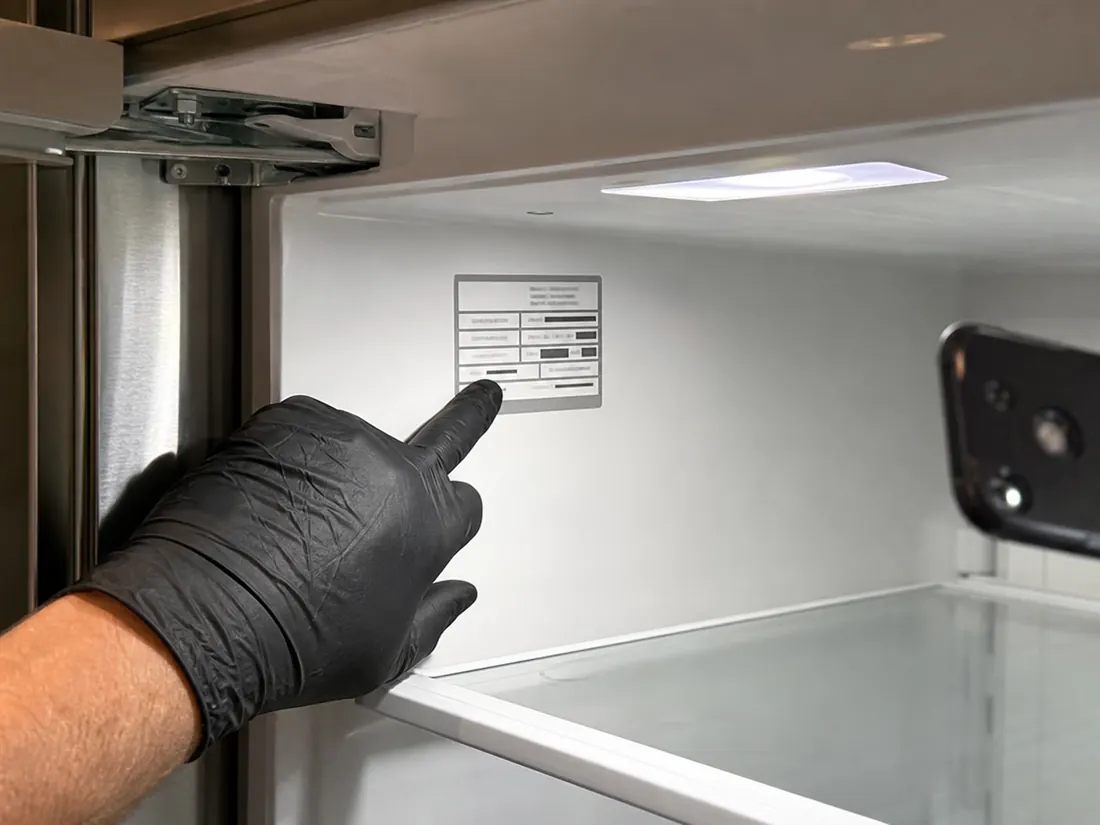
The model tag does not diagnose the failure, but it prevents the visit from starting with the wrong fan, gasket, valve, board or wine-zone sensor.
| Sub-Zero family | Common tag location | Why it changes the quote |
|---|---|---|
| BI built-in series | Often inside the fresh-food compartment near an upper frame or side wall. | Fan, damper, thermistor and gasket part paths can change by serial range. |
| 600 / 700 series | Often inside the compartment or near a hinge/grille area, depending on generation. | Older model ranges may need superseded parts or more careful cabinet access planning. |
| IT / IC integrated columns | Usually inside the column compartment or near an interior frame where it can be photographed safely. | Panel style, column layout, fan path and sensor placement affect timing and parts. |
| PRO and large built-ins | May require a wider interior photo if the tag is not readable without moving food. | Service planning should include floor protection, door swing and access weight. |
| Undercounter and wine storage | Often on an interior wall, frame or drawer area; do not force trim to expose it. | Zone sensors, fans, controls and door gaskets are especially model-specific. |
Local notes are diagnostic and access context. Redwood Shores humidity, Emerald Hills access, downtown service windows and older remodels can change what should be discussed before the visit.
| ZIP / neighborhood | Access or diagnostic note | What to have ready |
|---|---|---|
| 94061 / Farm Hill / Mount Carmel | Older remodels and panel-ready kitchens make model-tag and door-reveal photos useful before the visit. | Ask for model/serial, fresh-food and freezer readings, and whether the unit was recently moved. |
| 94062 / Emerald Hills / Edgewood Park | Hillside access and custom cabinetry can change appointment length and cabinet-safe pull planning. | Flag parking, steps, floor protection and whether a second person may be needed for movement. |
| 94063 / Downtown / Courthouse Square | Condos, compact kitchens and service windows make pre-call details valuable before route scheduling. | Have model-tag, alarm, grille and water-line details ready when access is tight. |
| 94065 / Redwood Shores | Waterfront humidity, high-use kitchens and wine storage can show moisture, ice and drift complaints. | Separate water-side evidence from temperature-side evidence to prevent the wrong part path. |
| 94064 / business-route timing | Short access windows make answer-first booking details more important than a broad service-area promise. | Use the phone or online booking page with symptom, ZIP, model and urgency ready before the appointment window is offered. |
You can safely record temperatures, note whether the compressor or fans seem to run, photograph the model tag and collect symptom photos. For a warm refrigerator, limit door openings and document whether the freezer is still holding.
Do not force trim, scrape frost around electrical areas or assume a compressor because the grille feels warm. A dusty condenser or fan issue can create similar symptoms and often deserves an accessible check before deeper work.
These examples show how a Redwood City Sub-Zero visit is worked from the first symptom to the likely outcome, and the evidence each repair leaves behind.
A BI-style built-in is described as warm in the fresh-food section while the freezer still holds. The useful first visit records both compartment temperatures, checks condenser airflow, confirms fan response and photographs the model tag before discussing a board or compressor path.
Outcome frame: Likely time: 1-3 hours when the branch is airflow, fan, thermistor or seal; second visit only if a serial-matched part is needed.
A Redwood Shores kitchen reports hollow cubes plus door condensation. The note separates water-side evidence from cold-side evidence: fill tube, inlet valve, freezer temperature, gasket compression and water-line routing are all checked before an ice maker assembly is ordered.
Outcome frame: Likely time: 1-3 hours for accessible water-path work; longer when valve access or cabinet movement is required.
A panel-ready door shows a frost stripe near one corner. The visit checks hinge reveal, panel weight, paper-strip compression and the exact gasket profile by model and serial, then verifies temperature recovery after the door closes cleanly.
Outcome frame: Likely time: 1-3 hours if the correct gasket or hinge path is available.
A sealed-system suspicion requires deeper access, but the built-in sits tightly in custom millwork. The note should document floor runners, protected cabinet edges, water-line slack and why accessible checks were not enough before movement.
Outcome frame: Likely time: 2.5-6.5 hours plus parts lead time when qualified sealed-system verification remains necessary.
The excerpts on this page summarize Redwood City repair outcomes with symptom, neighborhood, repair branch, timing, price and verification details.
Our Sub-Zero 650 ran nonstop and the fresh-food area climbed to 46 °F at our place in the Canyon area. The technician read the model tag, confirmed condenser airflow was fine, then caught a stalled evaporator fan before naming anything bigger. The same-day repair was $590 and temperatures settled back to 38 °F.
The door seal looked like a quick fix, but our Mount Carmel cabinet had older custom panels and a 600-series model tag that called for a different gasket profile. They matched it by serial, dialed in the hinge reveal and rechecked the frost line. The 2-hour repair cost $575, well within the page's gasket range.
Hollow cubes and a damp door gasket turned up the same week in our Redwood Shores kitchen, and we assumed the worst. The visit pulled them apart, checking freezer temperature, gasket compression and fill-tube behavior before replacing the inlet valve. It took just under 3 hours and cost $510, which stayed inside the ice-maker range.
Call (650) 437-1838 or use online booking. Have the model number, current temperatures, symptom and Redwood City neighborhood ready for the appointment conversation.
The site focuses on built-in side-by-side refrigerators, over-under units, integrated columns, freezer columns, undercounter drawers, ice makers and wine storage. It is not written as an all-brand appliance directory. The service path changes by model family, serial range and cabinet access.
A useful note should include symptom, model or serial reference, temperature readings, photo evidence, checked components, part category, quote conditions and post-repair verification. For cabinet movement, it should also mention floor protection, water-line slack and whether the unit was reseated squarely.
Common repair paths are evaporator fans, condenser fans, thermistors, gaskets, valves, ice-maker modules, control boards and cabinet-safe access. The correct path depends on model/serial, temperature split, water-path evidence and whether older remodels affect access.
Sub-Zero families can look similar while using different gasket profiles, fan motors, valves, boards and wine sensors. The model tag does not diagnose the failure, but it prevents wrong-part visits. Pair it with live readings and symptom photos.
No. A warm grille can reflect condenser restriction, fan trouble, cabinet heat or normal run time under load. Compressor or sealed-system work should wait until airflow, fan, sensor, gasket and control branches are checked and technical evidence supports escalation.
Say whether the unit is tight to trim, recently moved, on sensitive flooring, near stairs or connected to a visible water line. That helps decide if floor runners, edge protection and a reseat check are needed before deeper repair work.