
Model decode · 6 min read
How to Decode a Sub-Zero Serial Plate in Redwood City
Find and read your Sub-Zero model and serial plate in Redwood City to learn the unit's age, refrigerant era, series, and parts availability before you repair.
Each summer, when a Redwood City kitchen drifts past 80 degrees and a Sub-Zero starts running warm, most owners reach for the phone before they reach for the one label that answers half their questions. A unit built before 1995 almost always carries R-12 refrigerant, a 500-series designation, and a parts profile very different from a 600-series built-in sold after 2000. Reading the model and serial plate tells you three things at once: the appliance's age, its refrigerant era, and whether replacement parts still exist for it. Those three facts decide whether a $205 diagnostic visit leads to a sensible repair or a frank replacement conversation. This Redwood City guide sorts the usual confusion into its root causes, because owners rarely fail to read the plate for one reason. They fail because the plate hides in an odd spot, because the series codes look like gibberish, because the serial string seems random, or because nobody told them the code predicts parts supply. Working through those four causes in order turns a mystery sticker into a clear decision before a technician ever visits your Redwood Shores or Emerald Hills home.
Where Does Sub-Zero Hide Its Model and Serial Plate?
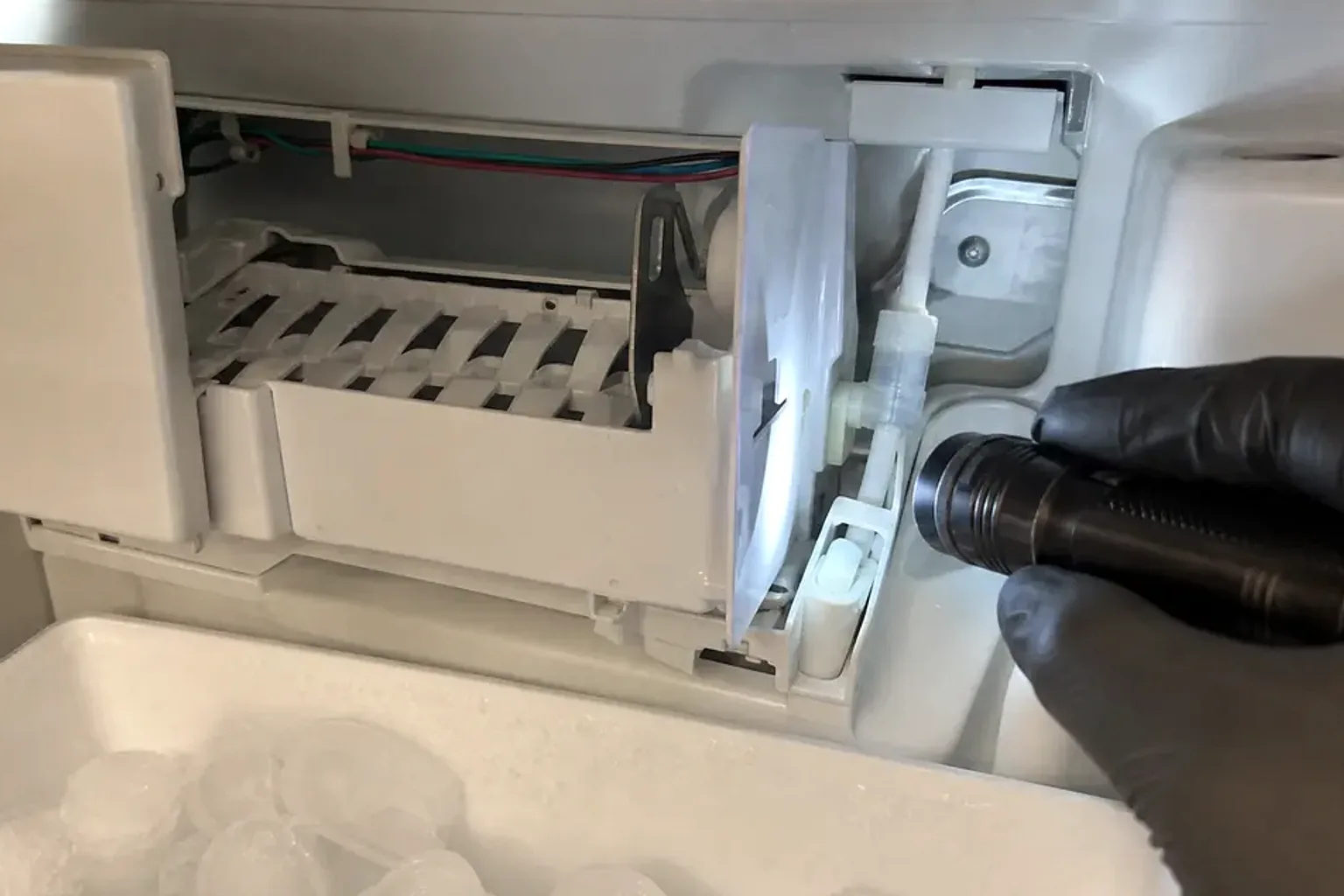
The first root cause of a stalled decode is simple: the Sub-Zero plate rarely sits where owners look. On a 500- or 600-series built-in refrigerator, the plate lives on the upper interior sidewall of the fresh-food compartment, usually left of the top shelf, and a flashlight reveals it faster than any teardown. Older Classic built-ins tuck the same label behind the lower kickplate grille, so a Redwood City owner may need to pop the grille clip to find the model and serial line. Sub-Zero column units, the tall single-zone refrigerator and freezer towers, print the plate on the interior sidewall near the top hinge, while integrated Designer models often place it behind the produce drawers where condensation smudges the ink. Wine storage units carry the label on the lower interior frame beside the bottom rack, a spot easy to miss behind a full row of bottles. A drawer-style undercounter Sub-Zero hides its plate on the drawer housing, visible only when the drawer is pulled fully out. Because the sticker weathers, snap a phone photo the moment you find it rather than trying to memorize a fourteen-character string in a cold compartment. Photographing the plate also protects the reading when a technician arrives, since a smudged label costs decode time on site. When a plate is truly illegible, the same information often repeats on the original owner's manual or on a duplicate tag near the compressor at the back, though reaching that second tag usually means moving a heavy built-in out of its cabinet.
How Do You Read the 500, 600, BI, Classic, and Designer Series?
The second confusion cause is the series code itself, which packs the product line and vintage into a few characters. A Sub-Zero model beginning with 5 marks the 500 series, the built-in line that ran through the 1990s and generally predates the year-2000 redesign. A leading 6 marks the 600 series, its direct successor, which brought a revised sealed system and different door and hinge parts. Modern built-ins wear the BI prefix, so a BI-36 or BI-42 is a current-generation Sub-Zero built-in refrigerator whose components still ship freely. The Classic and Designer names split the newest catalog by install style: Classic units are the framed, grille-topped built-ins Redwood City remodels have used for decades, while Designer units are flush integrated panels that hide behind custom cabinet fronts. A trailing letter often flags the door configuration, where S means a side-by-side, O signals an over-and-under freezer-on-bottom layout, and G marks a glass door on a wine or refrigerator unit. Numbers after the prefix state the cabinet width in inches, so a 48-wide Sub-Zero reads as a 48 regardless of series. Reading those pieces together, an Emerald Hills owner staring at a 632 knows instantly it is a 600-series, roughly 30-year-old built-in rather than a current BI model. That single distinction reshapes every later decision, from gasket sourcing to the honest repair-versus-replace math, long before a diagnostic band ever enters the discussion.
What Does the Serial Number Reveal About Age and Refrigerant Era?
The third root cause is the serial string, which looks random but encodes when your Sub-Zero left the factory. Sub-Zero serial numbers embed a date range that pins the build to within a couple of years, and that date is the single best predictor of refrigerant type. Units manufactured before 1995 typically use R-12, the CFC refrigerant phased out under the Clean Air Act, which means any sealed-system repair on that unit must recover and replace a refrigerant no longer freely sold. Sub-Zero built-ins from roughly 1995 through the 2000s moved to R-134a, a far more available refrigerant that keeps sealed-system work practical for a Redwood City household. The newest compact and column Sub-Zero models use R-600a, a hydrocarbon refrigerant that demands specific handling but ships in current parts channels. Matching the serial's date to the refrigerant era tells you whether a compressor or evaporator fault is a routine job or a specialist recovery task. Age from the serial also frames wear expectations, since a 25-year-old gasket, fan motor, or defrost heater has simply run longer than one from a 10-year-old unit. Write the decoded build year beside the series code, and the two numbers together explain most of what a technician will confirm on the $205 visit, which the shop credits toward the repair when you proceed. That paired reading turns a guess about your Sub-Zero into a grounded estimate of what the sealed system is likely to need.
Why Does the Plate Decide Parts Availability Before You Repair?
The last cause of decode paralysis is not knowing that the series and serial together forecast whether parts still exist. Current BI, Classic, and Designer Sub-Zero units enjoy full parts support, so a Redwood City gasket or fan swap on a recent built-in is a stock-part job priced within an industry-normal range. A 600-series unit usually still draws common wear parts like door gaskets and defrost components, though a few sealed-system pieces grow scarce as the line ages. A 500-series Sub-Zero from the 1990s is where availability tightens: some electronic boards and evaporators are discontinued, and a decoder that reveals a 500 series warns you to confirm part supply before committing to a teardown. Local pricing follows directly from that supply picture. A door gasket and seal repair on a Redwood City Sub-Zero runs roughly $315 to $890 depending on the door and the unit, while a straightforward diagnosis-and-fix falls in a $375 to $910 band once parts are stocked. Ice maker rebuilds sit higher, from about $1475 to $3520, because the assembly, water valve, and fill hardware are involved. Knowing your series before the visit lets you weigh those bands against the unit's decoded age honestly. A well-supported BI refrigerator with a $600 gasket job is an easy repair, while a 500-series unit needing a discontinued board tilts the same math toward replacement, and the decoded plate is what makes that call clear.
FAQ
Questions & answers
How do I find my Sub-Zero model number fast?
Check the upper interior sidewall of the fresh-food compartment first, then the lower grille on older Classic units. A flashlight finds the fourteen-character plate in under a minute, and a phone photo saves you re-reading a cold, smudged label later.
What refrigerant is in a pre-1995 Sub-Zero?
Sub-Zero units built before 1995 typically use R-12, a CFC refrigerant now phased out. That matters because any sealed-system repair must recover and replace a refrigerant no longer freely sold, unlike the R-134a used from roughly 1995 onward.
Does a 500-series Sub-Zero still have parts available?
Common wear parts like gaskets often remain, but some 500-series boards and evaporators are discontinued. Decode the plate and confirm part supply before a teardown, since scarce parts can tilt a 1990s unit toward replacement rather than repair.
Is the diagnostic fee credited if I repair?
Yes. The $205 diagnostic visit is credited toward the repair when you proceed, so decoding your model and serial beforehand helps that visit confirm the fault quickly instead of spending time reading a weathered plate on site. For hands-on help, Redwood City Sub-Zero Repair answers at (650) 437-1838.
Rather leave it to a specialist?
Have the failing compartment and model number ready, and you will get a real first opinion — not a sales pitch.
What customers say
The guide helped me find the plate behind our wine unit's bottom rack, which I never would have checked. Reading the 600-series code told me the parts were still common. I marked it four stars only because I wish it had a photo of each spot.
Decoded our old built-in as a 500 series from the early 1990s, R-12 and all. Knowing that before the visit saved a wasted trip, since we learned the board was discontinued and leaned toward replacing.
Clear, practical breakdown. I photographed the serial plate, matched the build year, and walked into the diagnostic call already knowing our unit used R-134a. The $205 fee got credited when we went ahead with the gasket repair.
| Plate location | Upper interior sidewall on 500/600 built-ins; behind the grille on Classic units |
|---|---|
| Refrigerant era | R-12 before 1995, R-134a from ~1995 on, R-600a on newest units |
| Diagnostic fee | $205, credited toward the repair when you proceed |
| Gasket range | About $315 to $890 for a Redwood City door gasket and seal repair |
| Local help | Redwood City Sub-Zero Repair — (650) 437-1838 |
Need this handled? Sub-Zero Model Number Location Guide | Redwood City · A Letter on Refrigerant Rules | Redwood City Sub-Zero